

Difference Between GI And MS Pipe
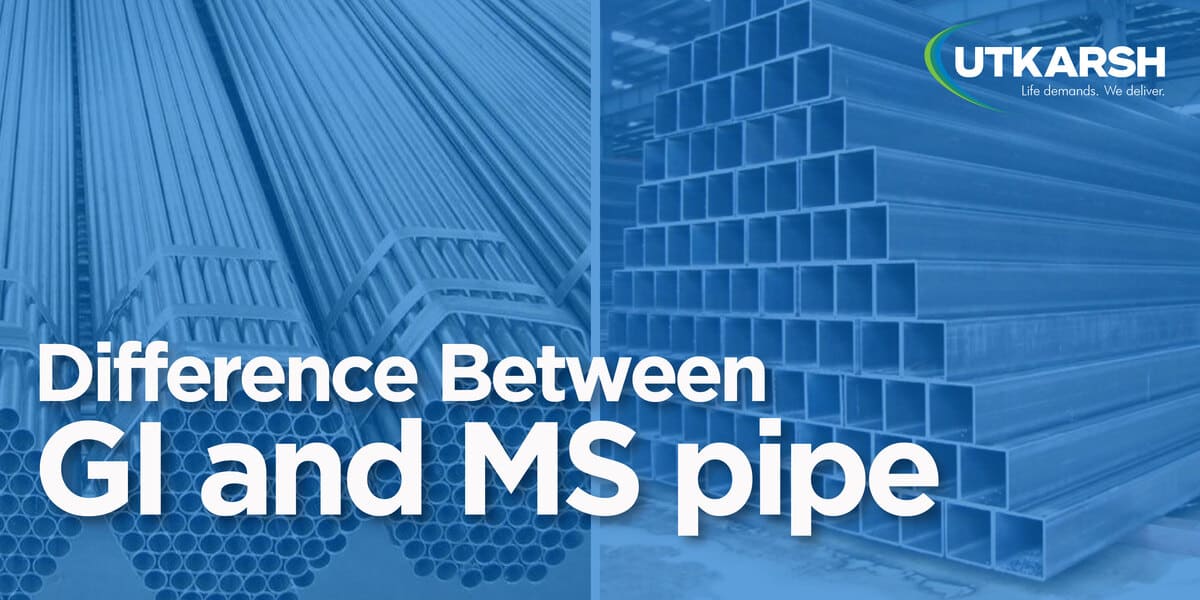
GI and MS pipes start from the same base material: mild steel. The difference lies in the finish. A GI pipe is an MS pipe that has been hot-dip galvanised with a layer of zinc, which shields it from rust. A plain MS pipe has no zinc and depends on paint or other coatings for protection.
That one difference in surface treatment shapes everything else, from where each pipe performs best to how it's welded and maintained. This guide covers both pipes, the Indian standards they're made to, and how to pick the right one for your project.
What are GI Pipes?
The full form of GI pipe is Galvanised Iron Pipe. The name is a holdover from older usage, though. Today's GI pipes are made from mild steel, not iron, so "galvanised steel pipe" is the technically accurate term. The base tube is coated with zinc through the galvanisation process, and that zinc layer is what gives the pipe its resistance to rust and corrosion.
GI pipes come in different sizes and wall thicknesses for industrial and commercial use. Because the coating holds up well against moisture, they're widely used for water transportation, plumbing systems and outdoor infrastructure.
Features of GI Pipes
Some key features of galvanised iron pipes include:
- High resistance against rust and corrosion
- Protective zinc coating for extended service life
- Smooth surface finish
- Easy installation and maintenance
- Suitable for outdoor and moisture-prone applications
- Cost-effective solution for water supply systems
Applications of GI Pipes
GI pipes are commonly used in:
- Water supply and distribution systems
- Plumbing applications
- Agricultural irrigation systems
- Structural applications
- Fire protection systems
- Electrical conduit applications
- Industrial pipelines
Explore our range of GI pipes for water supply, fire protection and structural use.
What are MS Pipes?
The full form of MS pipe is Mild Steel Pipe. These pipes are made from low-carbon steel, generally with less than 0.25% carbon. That low carbon content is what makes mild steel easy to weld, bend and fabricate, which is why MS pipes are used so widely across construction, engineering and industrial work.
Unlike GI pipes, MS pipes have no zinc coating. They're protected against corrosion through painting, coating or other surface treatments, depending on where they'll be installed.
Features of MS Pipes
The major features of mild steel pipes include:
- High tensile strength
- Excellent weldability and fabrication flexibility
- Strong structural performance
- Cost-effective manufacturing
- Suitable for heavy-duty applications
- Available in different shapes, sizes, and thicknesses
Applications of MS Pipes
MS pipes are widely used in:
- Structural frameworks
- Industrial machinery
- Engineering applications
- HVAC systems
- Firefighting systems
- Construction projects
- Mechanical and fabrication works
An experienced MS pipe supplier offers different grades and specifications of pipes suitable for diverse industrial requirements.
Get Insights On: Why MS Square Pipes are Changing the Way India Builds Its Infrastructure
GI Pipe vs MS Pipe: Key Differences
Since both pipes share the same mild steel base, most of their differences trace back to one thing: whether the pipe carries a zinc coating.
| Difference Factor | GI Pipe | MS Pipe |
|---|---|---|
| Base Material | Mild steel tube, hot-dip galvanised with zinc | Mild steel tube with no zinc coating |
| Corrosion Resistance | High, as the zinc layer protects the steel from moisture | Low on its own; needs paint or another coating |
| Strength | Same base steel, so strength is comparable for the same size and class | Same base steel, so strength is comparable for the same size and class |
| Welding | Possible, but releases zinc fumes; needs ventilation or coating removal at the joint | Easy to weld and fabricate |
| Weight | Slightly heavier due to the added zinc layer | Slightly lighter for the same size and wall thickness |
| Maintenance | Low, as the coating handles corrosion protection | Needs periodic repainting or recoating |
| Best Suited For | Water supply, plumbing, irrigation and outdoor installations | Fabricated structures, machinery and indoor or coated applications |
| Shapes Available | Round, square and rectangular hollow sections | Round, square and rectangular hollow sections |
Indian Standards for GI and MS Pipes
In India, GI and MS pipes are manufactured to Bureau of Indian Standards (BIS) specifications. Checking the standard on the pipe or test certificate is the quickest way to confirm quality.
- IS 1239 (Part 1): Covers mild steel tubes, both black (MS) and galvanised (GI), in smaller nominal bores commonly used for plumbing, water lines and general engineering.
- IS 3589: Covers larger diameter steel pipes used for water, gas and sewage transmission.
- IS 4736: Specifies the hot-dip zinc coating on mild steel tubes, which is the standard that governs galvanising quality in GI pipes.
Under IS 1239, pipes are also graded into Light, Medium and Heavy classes based on wall thickness. They're typically identified by colour bands: yellow for Light, blue for Medium and red for Heavy. Heavier classes handle higher pressure and tougher installation conditions, so the class matters as much as the choice between GI and MS.
GI Pipe vs MS Pipe: Which One Should You Choose?
Neither pipe is better across the board. The right choice depends on where the pipe goes and what it needs to withstand. Weigh these factors before you decide.
1. Application Requirement
Start with the job the pipe has to do. GI pipes suit water supply, plumbing and moisture-prone areas. MS pipes are the better fit for fabricated structures, frames and machinery, where the pipe will be cut, welded and painted anyway.
2. Environmental Conditions
Pipes exposed to water, humidity or open weather hold up longer when galvanised. MS pipes can work in these conditions too, but only with a protective coating that's kept in good repair.
3. Fabrication and Welding Needs
If the project involves heavy on-site welding or fabrication, MS pipes are simpler to work with. GI pipes can be welded, but the zinc around the joint must be handled safely and the weld area recoated afterwards.
4. Maintenance and Lifecycle Cost
GI pipes cost a little more upfront but need less upkeep. MS pipes are cheaper to buy, though repainting and recoating add to the cost over the pipe's service life.
Conclusion
GI and MS pipes share the same steel base, so the choice really comes down to the zinc coating. GI pipes make sense where corrosion is the main threat, such as water supply and plumbing. MS pipes work better where the pipe will be welded, fabricated and painted as part of a larger structure.
Match the pipe to the application, the environment and the maintenance you can commit to, and check that it's made to the relevant IS standard and wall thickness class.
Frequently Asked Questions
1. Which is better: GI pipe or MS pipe?
It depends on the application. GI pipes are better where corrosion resistance matters, such as water lines. MS pipes are easier to weld and fabricate, which suits structural and machinery work.
2. Are GI pipes more expensive than MS pipes?
Generally, GI pipes are slightly more expensive than MS pipes because of the additional galvanisation process that provides zinc coating and improved corrosion resistance.
3. Can MS pipes be used for outdoor applications?
Yes, MS pipes can be used outdoors, but they require proper surface treatment such as painting or coating to protect them from rust and corrosion.
4. Is GI pipe heavier than MS pipe?
Yes, slightly. A GI pipe is an MS pipe with a zinc coating, so for the same size and wall thickness, the added zinc makes it a little heavier.
5. Can GI pipe be welded?
Yes. Welding GI pipe releases zinc fumes, so it should be done with proper ventilation and protective equipment, or after grinding off the coating near the joint. The weld area should then be recoated, usually with zinc-rich paint, to restore corrosion protection.
6. Is GI pipe safe for drinking water?
GI pipes made to IS standards have long been used for potable water lines. Over many years, though, the internal zinc layer can wear away, leading to rust, scaling and reduced flow. Older GI lines should be inspected and replaced when corrosion sets in.
7. Which IS standard applies to GI and MS pipes?
IS 1239 (Part 1) covers both GI and MS tubes in common sizes, while IS 3589 covers larger diameter pipes. IS 4736 specifies the hot-dip zinc coating on GI pipes.