

Solar Energy is the Age of Renewable Power
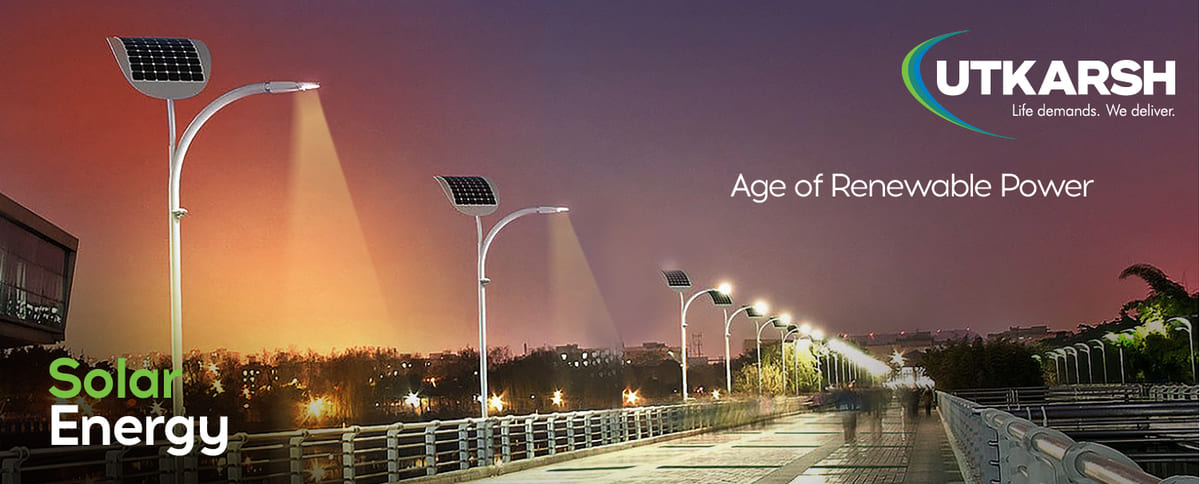
We live in the age of automation and artificial intelligence, where technology continues to reshape the way we live and work. Today, whenever we purchase electronic devices, one of the first things we consider is energy efficiency and long-lasting battery backup.
When discussing sustainable energy sources, solar power is often the first option that comes to mind. It is one of the most accessible and environmentally friendly alternatives available today. According to Allied Market Research, the solar energy market accounted for $52.5 billion and is projected to reach $223.3 billion by 2026, highlighting the rapid growth and global adoption of solar solutions.
As solar adoption increases worldwide, the need for supportive infrastructure such as solar-enabled street light poles is also growing significantly.
Why Solar Energy? A Readily Available Renewable Resource
The Sun emits an enormous amount of energy onto the Earth every day—enough to meet global energy demands many times over. Because solar energy is renewable, abundant, and widely available, it has become an attractive alternative to traditional power sources.
In the early stages, solar energy harvesting was relatively expensive and inefficient. However, over the last two decades, significant technological advancements have improved solar panel efficiency while reducing costs. These developments have made solar energy more practical and accessible for both residential and large-scale applications.
Today, solar power systems are increasingly integrated into urban infrastructure, transportation systems, and public utilities, including solar-powered street lighting supported by durable street light poles.
Global Growth in Solar Power Adoption
The use of solar energy has expanded dramatically over the years. Recently, the world witnessed more than 115 gigawatts of solar installations across the globe, exceeding the combined capacity of several other power generation technologies.
With ongoing technological improvements, solar power is expected to become cheaper and more efficient in the coming years. Many experts predict that by 2030, solar energy could become the most important source of electricity production in several regions worldwide.
This growth is also driving demand for supporting infrastructure such as high-quality street light poles and mounting structures that can accommodate solar panels in urban and rural environments.
Also Read: Integrating Solar Street Light Poles in Community Projects
Rising Demand for Solar Panel Installations
One of the major drivers behind the rapid expansion of solar power is the increasing installation of rooftop solar panels. Additionally, the integration of solar energy into modern architectural and infrastructure projects is accelerating its adoption.
Technological advancements have also played a major role in improving the performance of solar cells , enabling them to capture more sunlight and convert it efficiently into electricity. As a result, solar power has become an attractive solution for both consumers and energy producers.
In many public infrastructure projects, solar-powered street lighting systems supported by durable street light poles are being deployed to improve energy efficiency and reduce dependence on traditional electricity grids.
Solar Energy and Its Environmental Impact
As demand for solar cells continues to grow, the use of solar panels is expected to increase significantly in the future. Solar technology can capture light energy and convert it into electricity efficiently, making it a viable alternative to conventional energy sources.
Consumers and industries are more likely to adopt solar solutions if they can produce energy comparable to traditional non-renewable resources. The expansion of solar power not only helps reduce electricity costs but also contributes positively to environmental protection and climate change mitigation.
Solar-powered lighting infrastructure, supported by robust street light poles, is increasingly being used in smart city projects, highways, residential complexes, and public spaces.
Flexibility and Versatility of Solar Installations
One of the major advantages of solar energy is its ease of installation and versatility. Solar systems can power devices ranging from small electronic gadgets and toys to large infrastructure systems and even entire cities.
Because solar technology is scalable and flexible, it can be integrated into numerous applications, including solar street lighting systems mounted on specially designed street light poles.
With continued innovation and infrastructure development, solar installations are expected to grow steadily over the next decade, supporting the global transition toward clean energy.
Conclusion
At Utkarsh India, the focus is on promoting renewable resource solutions that support a sustainable lifestyle. As a trusted street light pole manufacturer , the company offers high-quality street light poles with solar panel mounting options designed to meet modern infrastructure requirements.
These poles are engineered for durability, safety, and customization, making them suitable for various solar lighting applications in urban and rural environments.
Frequently Asked Questions (FAQs)
1. What is a street light pole used for?
A street light pole is a structural support system used to mount lighting fixtures for roads, highways, public areas, and infrastructure projects. In solar lighting systems, the pole also supports solar panels and batteries.
2. Why are solar street light poles becoming popular?
Solar street light poles are gaining popularity because they reduce electricity consumption, lower operational costs, and support environmentally friendly energy solutions.
3. What factors should be considered when choosing a street light pole?
Important factors include material quality, load-bearing capacity, corrosion resistance, height, and compatibility with solar panel mounting systems.
4. Why is it important to choose a reliable street light pole manufacturer?
A trusted street light manufacturer ensures that the poles are structurally strong, durable, and designed according to industry standards, which is essential for long-term safety and performance.
5. How do solar-powered street lighting systems work?
Solar-powered street lights use solar panels to capture sunlight during the day, store the energy in batteries, and power LED lights at night. The street light pole provides the structural support for the entire system.