

4 Reasons Why PEB Industrial Sheds are Popular in India
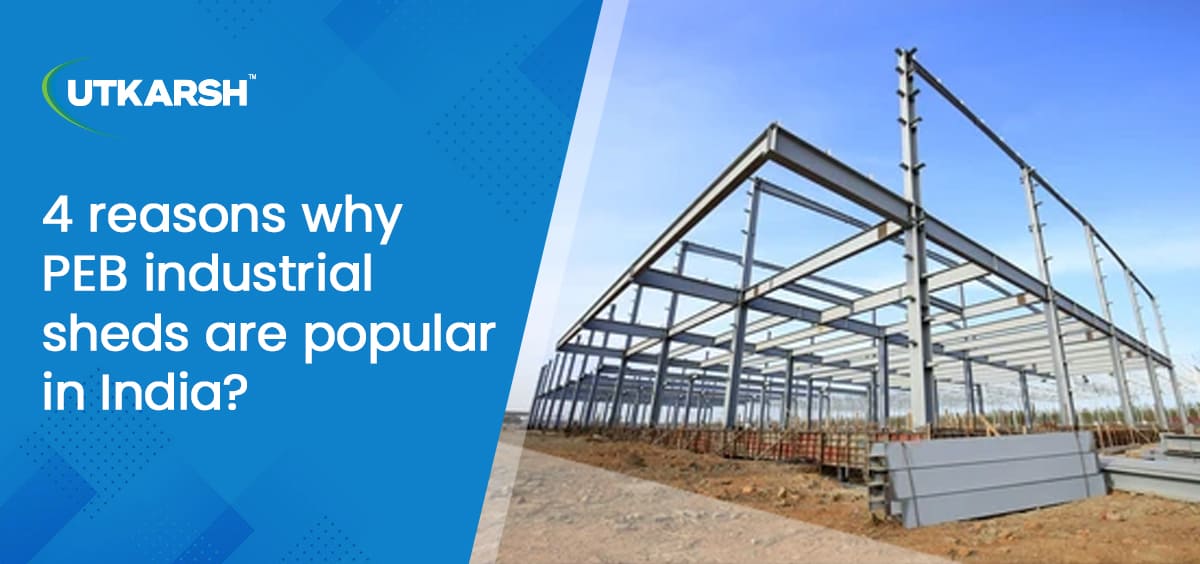
Pre-engineered buildings (PEBs) have become a widely used construction solution for industrial, commercial, warehouse, and infrastructure projects. Unlike conventional construction, PEBs use factory-fabricated steel components that are designed, manufactured, transported, and assembled at the project site.
The growing demand for PEB sheds in India is driven by the need for faster construction, efficient use of materials, flexible designs, and durable structures. From manufacturing plants and warehouses to agricultural facilities and commercial spaces, pre-engineered construction can be adapted to different project requirements.
Here are four important reasons why PEB industrial sheds are popular in India.
1. Faster and More Cost-Effective Construction
One of the key advantages of a pre engineered metal building is its streamlined construction process. Major structural components are fabricated under controlled factory conditions before being transported to the project site.
This approach reduces the amount of fabrication and modification required at the construction location. It can also reduce construction time, site labour requirements, material wastage, and associated project costs.
Factory-based fabrication allows components to be manufactured according to precise design specifications. Once they reach the site, the structural members can be assembled using the required connections and installation methods.
For businesses working with strict project timelines, a PEB shed can therefore provide a practical alternative to conventional construction methods.
How PEB Construction Helps Reduce Project Time
- Factory fabrication can take place while site preparation is underway.
- Standardised components simplify transportation and assembly.
- Controlled manufacturing can improve dimensional accuracy.
- Reduced on-site fabrication can help streamline installation.
- Efficient material usage can help minimise construction waste.
2. Flexible and Customisable Designs
Industrial buildings rarely have identical requirements. A warehouse may require large column-free areas, while a manufacturing facility may need space for machinery, cranes, ventilation systems, offices, or loading areas.
PEB structures can be designed according to the intended use, available site area, loading requirements, and future expansion plans. This flexibility makes them suitable for a wide range of applications.
A PEB structure manufacturer in India can develop structures with different spans, heights, roof profiles, cladding systems, openings, and internal layouts based on project specifications.
PEB industrial sheds can also accommodate features such as:
- Large open floor areas
- Loading and unloading zones
- Mezzanine floors
- Crane systems
- Doors and windows
- Ventilation systems
- Gutters and downspouts
- Insulation systems
- Skylights and other building accessories
This design flexibility allows businesses to plan their facilities according to their operational requirements rather than adapting their activities to a fixed building design.
3. Strength and Durability
Industrial buildings need to remain stable under different environmental and operational conditions. PEB structures are engineered using structural steel components selected according to project-specific design and loading requirements.
Proper structural design considers factors such as dead loads, live loads, wind loads, equipment loads, and, where applicable, seismic forces. This helps the building perform reliably under the conditions for which it has been designed.
Quality steel, appropriate connections, protective coatings, and suitable roofing and cladding systems can further contribute to the service life of the structure.
Depending on the project requirements, PEB industrial sheds can also incorporate insulation, ventilation, drainage, and other building systems to improve functional performance.
For industrial and commercial applications, this combination of structural strength and practical design makes PEBs suitable for long-term use.
4. Easy Installation, Modification and Expansion
Another important advantage of PEB construction is its ability to accommodate changes in a facility's requirements.
Businesses may need additional production space, storage areas, offices, or equipment as their operations grow. A properly planned PEB structure can allow for future modifications and extensions without requiring the entire building to be reconstructed.
The use of prefabricated components also simplifies the assembly process. In certain applications, components can be dismantled and reused or relocated, depending on the structural design and project requirements.
This flexibility can be particularly useful for:
- Growing manufacturing facilities
- Warehouses and distribution centres
- Temporary industrial facilities
- Agricultural storage buildings
- Workshops
- Commercial buildings
- Project-based infrastructure facilities
Future expansion should be considered during the initial design stage so that the structure, foundation, connections, and building layout can accommodate planned modifications.
Get Insights On: Types of Pre-Engineered Buildings Used Across Different Industries
Where are PEB Industrial Sheds Used?
The versatility of PEB construction makes it suitable for several industries and applications. Common examples include:
- Manufacturing plants
- Warehouses and logistics facilities
- Automotive facilities
- Textile units
- Food processing facilities
- Pharmaceutical facilities
- Agricultural storage
- Workshops and service centres
- Cold storage facilities
- Airports and infrastructure facilities
- Commercial and institutional buildings
The design of the building can be adapted according to the operational requirements, site conditions, storage needs, and future expansion plans.
What to Consider When Choosing a PEB Manufacturer?
Choosing the right PEB manufacturer is an important part of any PEB project. Businesses should consider more than just the initial cost of the structure.
Important factors include:
Design and Engineering Capabilities
The manufacturer should have the required engineering expertise to design the structure according to project loads, dimensions, site conditions, and applicable standards.
Manufacturing Quality
Controlled fabrication and quality checks can help ensure that structural components meet the required specifications before they are transported to the site.
Raw Material Quality
The quality and traceability of structural steel and other materials can have a direct impact on the performance of the building.
Testing and Quality Control
In-house inspection and testing facilities can help maintain consistency across different stages of fabrication and production.
Installation and Project Support
Transportation, erection, technical coordination, and after-sales support can also influence the overall efficiency of a PEB project.
Utkarsh India: PEB Manufacturing and Engineering Capabilities
Utkarsh India provides pre-engineered building solutions for a wide range of industrial, commercial, and infrastructure applications. Its PEB structures are used for housing, office spaces, warehouses, hangars, plant buildings, airports, shopping malls, railway facilities, auditoriums, and cold storage projects.
The company carries out fabrication, quality checks, and testing through its manufacturing operations. Its PEB solutions use structural steel and other materials sourced from established suppliers, including SAIL.
Utkarsh India's engineering capabilities and projects have been associated with organisations and institutions including IITs, Indian Railways, PHED, and SGS. Its client portfolio has included companies such as JIO, TATA, ADANI, L&T, IL&FS, ESSEL Group, ONGC, and Port Trust.
For businesses evaluating a PEB building company, factors such as engineering capability, manufacturing capacity, quality control, raw material sourcing, and project experience are important when selecting a partner. These considerations are also relevant when comparing the best infrastructure company in India for a larger industrial or infrastructure requirement.
Why PEB Sheds Continue to Gain Popularity
The growing use of PEB industrial sheds in India can be linked to their ability to combine speed, structural performance, design flexibility, and efficient construction.
For businesses that need functional industrial or commercial space within planned timelines, a well-designed PEB can provide a practical construction solution. With proper engineering, quality materials, controlled fabrication, and professional installation, these structures can support both present requirements and future expansion.
FAQs
1. What is a PEB shed?
A PEB shed is a pre-engineered building made from factory-fabricated structural components that are transported to the site and assembled according to an engineered design.
2. Why are PEB sheds popular in India?
PEB sheds are popular because they offer faster construction, flexible designs, efficient material usage, structural durability, and the potential for future modification or expansion.
3. What is a pre engineered metal building used for?
A pre engineered metal building can be used for warehouses, manufacturing plants, workshops, agricultural facilities, commercial buildings, cold storage, and various infrastructure applications.
4. How do I choose a PEB structure manufacturer in India?
Consider the manufacturer's engineering capabilities, raw material quality, manufacturing facilities, quality-control processes, testing capabilities, project experience, and installation support.
5. Can a PEB industrial shed be expanded later?
Yes. PEB structures can be designed with future expansion in mind. The feasibility of adding floors, extending the building, or modifying the layout depends on the original structural design and site requirements.
6. Are PEB structures suitable for industrial applications?
Yes. PEB structures are commonly used for manufacturing facilities, warehouses, workshops, logistics centres, processing units, and other industrial applications where large usable spaces and efficient construction are required.