

Difference between W-beam crash barriers and the Thrie beam crash barriers
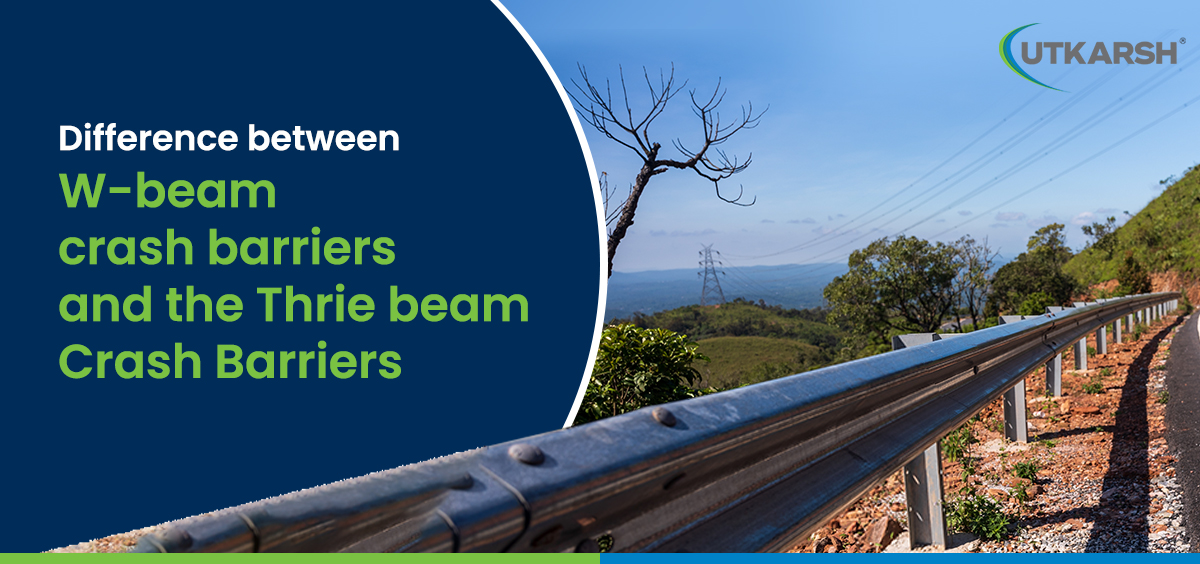
Metal crash barriers are placed alongside busy roads to prevent vehicles from veering off and crashing dangerously. Two prevalent types of crash barriers used extensively are W-beam and Thrie-beam barriers. The w metal beam crash barrier is widely used for standard road safety applications due to its cost-effectiveness and efficient impact absorption, while the thrie beam crash barrier offers enhanced strength and resistance for high-impact zones. While they share the same core function, they possess distinct characteristics suited for different applications. Here, we share some of the major differences between W-beam crash barriers and Thrie-beam crash barriers.
1. W-Beam crash barriers:
The W-beam, also known as the double-wave barrier, is a classic and widely used design. Its profile resembles a capital "W". It offers a simple yet effective deflection mechanism. Here are some of its key features:
- Design and material: W-beams are constructed from corrugated steel sheets, which ensures a balance between strength and weight. The corrugated design improves rigidity and helps with controlled deflection upon impact. This allows the barrier to absorb some of the collision force.
- Applications: W-beam barriers are ideal for various applications, including:
- Roadside protection: Shielding vehicles from roadside hazards like embankments, trees, or utility poles.
- Median separation: Dividing traffic flow on highways and preventing head-on collisions.
- Traffic control: Directing traffic flow in construction zones or around temporary hazards.
Advantages:
- Cost-effective: The simple design and readily available materials make W-beams a cost-efficient option for many applications.
- Versatility: Their adaptability makes them suitable for different roadside safety needs.
- Easy installation: The straightforward design ensures quick and efficient installation.
2. Thrie-Beam crash barriers:
The Thrie-beam crash barrier features a three-wave corrugated profile. This extra corrugation translates to several key advantages:
- Design and material: Similar to W-beams, Thrie-beams are made from corrugated steel. However, the extra corrugation provides increased rigidity and strength.
- Applications: Thrie-beam barriers are particularly suited for areas with:
- High traffic volume: They can withstand the impact of heavier vehicles travelling at higher speeds.
- Increased risk of severe accidents: Their superior strength makes them ideal for high-risk zones like sharp curves or bridge approaches.
Advantages:
- Superior impact resistance: The three-wave design offers better deflection and impact absorption capabilities. This helps to minimise the damage to vehicles and occupants in high-speed collisions.
- Reduce redirection risk: The improved deflection characteristics of Thrie-beams can help prevent vehicles from bouncing back into traffic lanes.
Looking for information regarding metal beam crash barrier prices?
Explore our metal beam crash barrier solutions designed for superior road safety. Discover our wide range of crash barriers, including W-Beam and Thrie Beam variations, engineered to meet diverse safety needs across highways, urban roads, and infrastructure projects.
We have a manufacturing capacity of 12,000 MT per month and use only the best quality raw materials. Our facilities include an in-house testing laboratory and a 24/7 logistics and dispatch department. We maintain a ready stock of at least 50 km at all times. Our four in-house galvanisation units, each 12.8 metres long, ensure top-notch quality. Our materials adhere to quality norms set by Indian and American boards and are crash-tested to meet European standards.
Conclusion
Both W-beam and Thrie-beam crash barriers play a crucial role in enhancing road safety, each serving specific requirements based on traffic conditions and risk levels. While W-beam barriers offer a cost-effective and versatile solution for general applications, Thrie-beam barriers provide superior strength and impact resistance for high-risk and high-speed zones. Choosing the right metal beam crash barrier ensures optimal protection, improved vehicle control during collisions, and long-term safety for road users.
To know more about our metal beam crash barrier specifications, contact us.