

How Telecom Tower Infrastructure Drives the Growth of IoT Networks
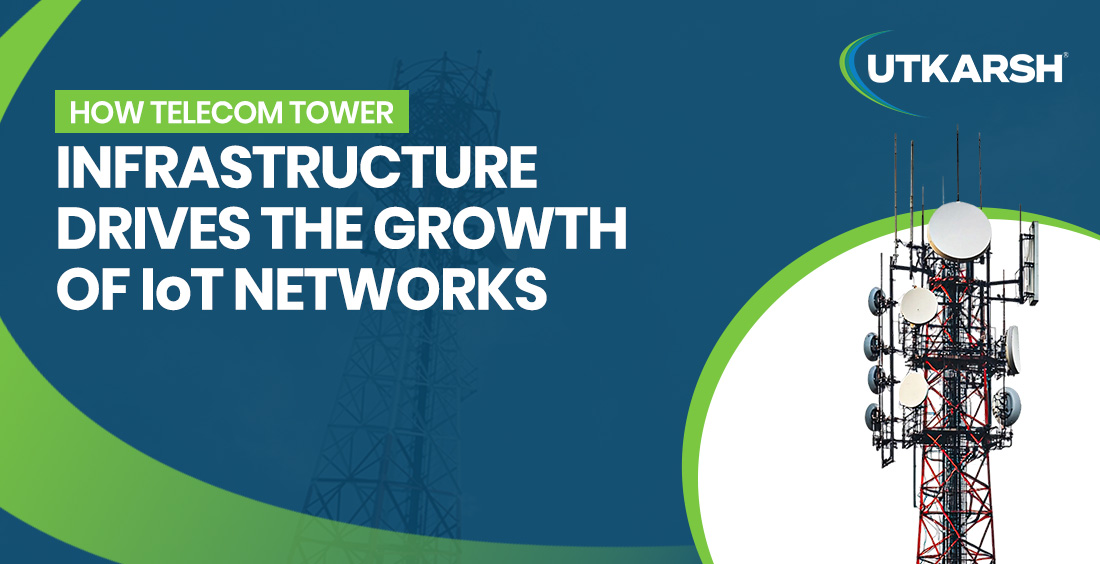
The rapid expansion of IoT ecosystems—spanning smart cities, industrial automation, connected mobility, and remote monitoring—depends heavily on robust telecom tower infrastructure. As billions of devices communicate in real time, the efficiency, reliability, and scalability of the IoT network infrastructure.
Telecom towers act as the backbone of modern telecommunication infrastructure, enabling uninterrupted connectivity and low-latency communication—both essential for IoT operations.
Why Telecom Tower Infrastructure Is Critical for IoT Network Expansion
1. Ensures High Network Availability
Telecom towers enhance the reach and quality of connectivity required for IoT devices to transmit data efficiently.
Key Benefits:
- Stable network signals across urban and rural regions
- Improved device uptime crucial for industrial IoT
- Reduced network failures and communication gaps
2. Supports Massive Device Connectivity
IoT networks involve millions of sensors, meters, controllers, and monitoring devices.
Telecom towers enable:
- High-capacity data exchange
- Real-time sensor communication
- Scalability for future IoT applications
3. Facilitates Low-Latency Communication
Smart cities, autonomous vehicles, and mission-critical systems require near-zero delays.
Telecom tower infrastructure helps achieve:
- Faster data routing
- Stable communication pathways
- Low latency for responsive IoT functions
4. Enables Efficient Data Backhaul for IoT Applications
IoT devices generate massive volumes of data that must travel through telecom networks quickly.
Telecom towers provide:
- High-capacity backhaul support
- Consistent data flow between IoT nodes
- Smooth integration with cloud and edge computing systems
5. Enhances Rural and Remote IoT Deployment
Agriculture IoT, remote healthcare systems, and environmental monitoring rely on strong network penetration.
Telecom towers help:
- Extend coverage to underserved regions
- Improve IoT adoption for rural development
- Ensure stable connectivity despite geographical challenges
Types of Telecom Tower Infrastructure Powering IoT Growth
1. Ground-Based Towers (GBT)
Ideal for large IoT networks needing high load capacity.
2. Roof-Top Towers (RTT)
Perfect for congested urban areas with limited land availability.
3. Smart Poles
Integrate lighting, surveillance, EV charging, and IoT sensors in one structure.
How Utkarsh India Strengthens IoT Network Infrastructure
As one of India’s trusted telecom tower suppliers , Utkarsh India delivers high-precision, high-strength tower solutions that support advanced telecommunication infrastructure and rapidly growing IoT ecosystems.
Why Utkarsh India Is Preferred by Telecom Operators
- Hot-dip galvanized structures for long-term corrosion resistance
- Compliance with national & international standards
- Advanced fabrication ensuring durability
- Proven track record in large-scale telecom deployments
Utkarsh India empowers the next generation of IoT innovations by manufacturing infrastructure that delivers reliability, resilience, and long-term performance.
Conclusion
Telecom tower infrastructure plays a pivotal role in driving IoT growth by enabling high network availability, low latency, massive connectivity, and seamless data transfer. As IoT continues to expand across industries, the demand for robust and scalable telecom towers will rise exponentially.
With its advanced engineering expertise and premium-quality tower systems, Utkarsh India stands as one of the leading telecom tower suppliers, helping build a connected, digital, and smarter India.