

Key Design Parameters for Rooftop Solar Mounting Structure Systems
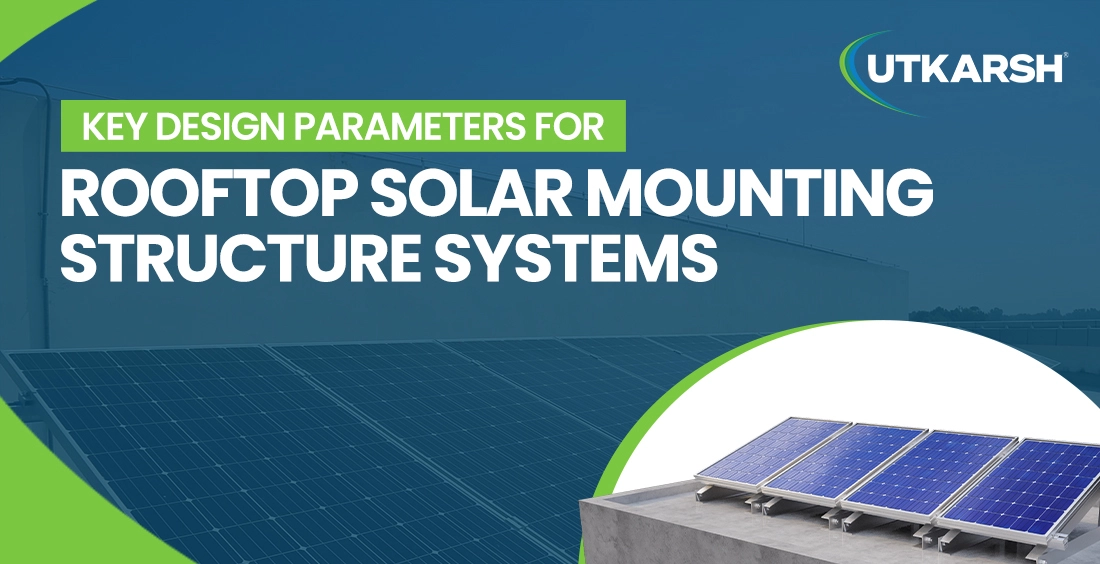
Rooftop solar installations offer long-term financial savings and environmental benefits for residential, commercial, and industrial buildings. With advancements in solar technology, panel efficiency has significantly improved. However, the performance and lifespan of a solar plant depend not only on the panels but also on a well-engineered rooftop solar mounting structure design.
Before installing a rooftop solar system, it is essential to thoroughly evaluate the building, roof characteristics, and site conditions. Each rooftop presents unique challenges, and overlooking key parameters can impact safety, energy output, and system durability.
Commercial buildings with rooftop solar systems often display variations in layout, orientation, and structural configuration. These differences arise from multiple technical factors rather than aesthetics alone. Designing a reliable rooftop solar mounting structure requires engineering expertise, precise calculations, and an understanding of real-world operating conditions.
To design an efficient and structurally sound system, several critical factors must be assessed.
Available Rooftop Area
The first step in rooftop solar mounting structure design is evaluating the usable rooftop area. This includes assessing roof dimensions, obstructions, and load-bearing zones. If construction drawings are available and accurate, they can help estimate the roof size. However, on-site measurement is always recommended for accuracy.
For rooftops that are difficult to access, modern tools such as laser distance meters or professional solar surveys can be used to determine the exact mounting surface. Accurate area assessment helps optimize panel placement, spacing, and structural layout.
Shading and Orientation
Solar panels must remain free from shading to deliver optimal performance. Shading from nearby buildings, parapet walls, trees, HVAC units, or adjacent solar panels can significantly reduce energy output.
A proper shading analysis ensures that the rooftop solar panel mounting structure is designed to avoid shadow overlap throughout the day and across seasons. Typically, panels are installed with a tilt of 5–10 degrees to prevent inter-row shading.
For unshaded rooftops in India, south-facing panels generally produce maximum energy. However, in commercial applications, southwest orientation can better align generation with peak afternoon electricity demand.
Roof Structure
The structural condition of the roof is a critical consideration in rooftop solar design. Rooftop installations on buildings below certain heights are generally more economical, as structural reinforcement requirements increase with building elevation due to wind loads.
Solar panels and mounting structures exert additional dead loads on the roof. On average, solar systems weigh between 2–6 pounds per square foot. Therefore, the roof must be structurally capable of supporting the combined load of modules, mounting structures, and wind forces.
Energy Requirements
To achieve optimal performance, the solar system should be designed based on the building’s actual energy consumption. While achieving net-zero energy is an ideal goal, it often requires large rooftop space and higher capital investment.
Understanding daily and annual electricity usage helps determine the appropriate system capacity. An undersized system may fail to meet energy demands, while an oversized system may not be feasible due to space or budget constraints. Aligning energy requirements with available roof area is essential for an efficient rooftop solar mounting structure design.
Roofing Issues
Roofing material and waterproofing considerations play an important role in rooftop solar installations. In most cases, PV panels do not need to be mechanically connected to the roof slab unless the building is located in a high-wind zone.
Ballasted mounting systems are often used to prevent movement due to wind while maintaining roof integrity. These systems allow easy removal or replacement of panels without damaging the roof surface.
Since rooftop solar panel mounting structures require minimal maintenance, foot traffic around panels should be limited. In areas with unavoidable access, protective walkways or reflective pads can be incorporated to improve safety and system efficiency. For a better understanding of structural considerations and installation requirements, refer to the key differences between ground-mounted and roof-mounted solar structures. Consulting the rooftop solar mounting structure designer before installation is advised to avoid potential issues.
Deciding the Optimum Size of Solar Panel System
Determining the optimal system size involves balancing energy goals, roof space availability, and budget considerations. Some building owners aim to offset complete electricity costs, while others prefer partial energy substitution.
Large buildings may require smaller systems if energy consumption is low, while smaller buildings with high energy usage may be limited by roof space. Therefore, energy demand and usable rooftop area must be evaluated together to define the most suitable system size.
Why Utkarsh India is a Reliable Partner for Rooftop Solar Mounting Structures
Utkarsh India offers engineered rooftop solar mounting structure solutions designed to meet diverse rooftop conditions across India. Backed by four decades of experience in structural steel manufacturing, Utkarsh delivers products that align with industry standards and project-specific requirements.
Value from Utkarsh India
- Proven expertise in infrastructure and solar mounting systems
- In-house engineering, precision manufacturing, and quality testing
- Trusted by EPCs and developers across large-scale projects
- Compliance with Indian standards, superior corrosion protection, and consistent quality
Utkarsh’s rooftop mounting systems are designed for high wind resistance, accurate fabrication, and long service life, making them suitable for residential, commercial, and industrial solar installations.
Also Read: A Complete Guide to Ground Mounted Solar Structures: Types, Applications, and Advantages
Conclusion
Designing a rooftop solar system involves far more than panel selection. Factors such as roof structure, shading, energy demand, orientation, and mounting design play a crucial role in system safety and performance.
A carefully planned rooftop solar mounting structure design ensures durability, efficiency, and long-term returns. Partnering with an experienced manufacturer like Utkarsh India helps project owners achieve reliable installations that perform consistently over decades.
FAQs
What is rooftop solar mounting structure design?
Rooftop solar mounting structure design refers to engineering the support system that holds solar panels safely while managing loads, wind forces, and roof conditions.
Why is wind load important in rooftop solar mounting structures?
Wind load affects panel stability and roof safety. Proper design prevents uplift, vibration, and long-term structural damage, especially in high-wind zones.
How do roof type and condition impact rooftop solar installations?
Roof material, strength, and waterproofing determine the mounting method, load capacity, and durability of the rooftop solar mounting structure.
How is the optimal size of a rooftop solar system decided?
System size depends on energy consumption, available rooftop area, shading, and inverter capacity to ensure efficient power generation.