

How Flexible Duct Pipes Improve Cable Safety and Longevity
India's demand for cables is rising fast, and it is rising across many sectors at once. Telecom companies are laying more fibre optic cable every year to support 5G and FTTH broadband. Power utilities are adding underground cables for smart grids and renewable energy projects. Smart city programs need cables for surveillance, traffic systems, and street lighting. Data centres, railways, and industrial plants add even more demand. The Indian wires and cables market is projected to grow from around ₹1.24 lakh crore in 2025 to nearly ₹4.8 lakh crore by 2035.
More cable in the ground means more risk. Buried cables face soil pressure, moisture, rodents, chemicals, and shifting ground every single day. A single cable fault can cause network downtime, costly repairs, and safety hazards. This is why safety must come first in any underground cable project, and it is why the right duct pipe matters as much as the cable itself.
What is a Flexible Duct Pipe?
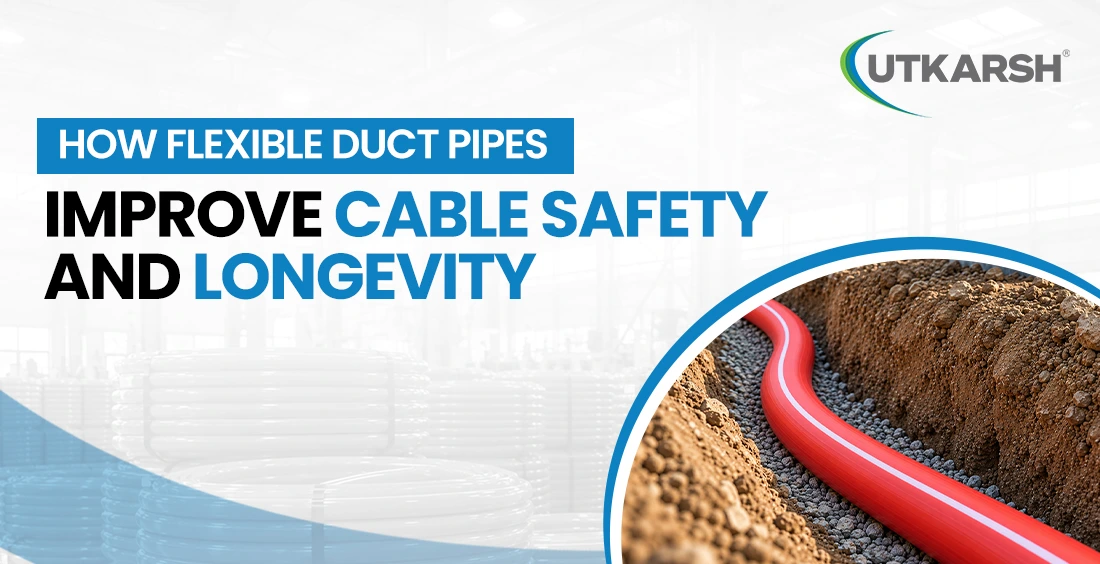
A flexible duct pipe is a conduit that houses and protects cables laid underground or through tight spaces. It is made from high-density polyethylene (HDPE), a material that bends around corners, obstacles, and uneven terrain without cracking. This flexibility sets it apart from rigid pipes, which need more joints and fittings and are harder to route through congested urban areas.
A flexible duct pipe does three main jobs. It shields cables from soil pressure, water, and pests. It gives cables a smooth, low-friction path for pulling or blowing. And it allows future cable additions or repairs without digging up the whole route. You will find flexible duct pipes in telecom networks, power cabling, street lighting, CCTV systems, and smart city infrastructure. They also support data centre connectivity and rural broadband projects such as BharatNet.
Raw Material and Standards Behind Utkarsh India's Flexible Duct Pipes
The strength of any duct pipe starts with its raw material. Utkarsh India manufactures its flexible duct pipes using virgin-grade HDPE, not recycled or mixed material. Virgin HDPE gives the pipe better tensile strength, higher resistance to cracking, and a longer working life underground.
Utkarsh India's flexible duct pipes also carry UV certification. This protects the pipe from breaking down when it sits in storage or gets partly exposed to sunlight before burial. Many of these pipes include a co-extruded lubricant layer on the inner wall. This layer cuts friction during cable pulling, so cables slide through with less force and less chance of damage.
Utkarsh India manufactures its ducts to meet Telecommunication Engineering Centre (TEC) specifications and relevant Bureau of Indian Standards (BIS) norms. Every batch goes through quality checks, including tests for melt flow rate, elongation, and environmental stress crack resistance. These standards are not just paperwork. They are what keep a buried cable safe for decades, not just for a few years.
How Flexible Duct Pipes Improve Cable Safety
Good material and design only work if installation is done right. Following the correct safety protocols in handling and installing PLB HDPE ducts protects both the installation crew and the cable inside. This includes careful handling on site, proper trenching depth, and correct jointing methods, all of which reduce the risk of damage before the network even goes live.
- Protection from external damage: The HDPE outer wall resists soil pressure, mechanical impact, and rough handling during installation.
- Moisture and chemical resistance: Unlike metal conduits, HDPE does not rust or corrode. It stays stable even in wet soil or areas with harsh groundwater chemicals.
- Rodent and pest resistance: A tough outer layer keeps rodents and insects from chewing through and exposing the cable inside.
- Fewer joints, fewer failure points: Because the pipe bends easily, installers need fewer joints and fittings. Each joint is a potential weak point, so fewer joints mean a safer network.
- Low-friction cable pulling: A smooth or lubricated inner surface reduces the force needed to pull or blow cables through the duct, lowering the risk of nicks, cuts, or insulation damage during installation.
How Flexible Duct Pipes Improve Cable Longevity
- Long service life: Virgin HDPE construction and UV-grade material can support a service life of decades under normal operating conditions.
- Weather resistance: The material holds up under temperature swings, sunlight exposure, and heavy rain without becoming brittle.
- Lower maintenance costs: Strong, corrosion-free ducts mean fewer repairs and less digging over the life of the network.
- Future-ready networks: Flexible ducts make it easier to add or upgrade cables later, so the same infrastructure can support new technology without a full rebuild.
Why Utkarsh India is a Trusted Name in Cable Protection
Utkarsh India, the best infrastructure company in India, brings decades of pipe manufacturing experience to every flexible duct pipe it produces. Its engineers understand what underground infrastructure projects actually need, from BharatNet expansion to smart city cabling and power utility networks. The company's TEC-compliant, BIS-aligned manufacturing process reflects real technical expertise, not just marketing claims. A strong track record across telecom, power, and government infrastructure projects has built genuine industry authority. Every batch of duct pipe goes through strict quality testing before it leaves the factory, giving project engineers a solid reason to trust the product they are putting in the ground for the next several decades.
Also Read: Key Benefits of Working with Reputable Optical Fiber Cable Suppliers
Choosing the Right Cable Protection Pipe
When you select a flexible duct pipe for an underground project, check three things. First, confirm the raw material is virgin-grade HDPE, not a blend. Second, check that the manufacturer follows recognised standards like TEC or BIS. Third, look for a proven track record on similar projects, whether that is telecom, power, or municipal infrastructure. Getting these three right at the start saves money and downtime later.
Final Thoughts
Cable networks across India are growing fast, and they need protection that can keep up. A quality flexible duct pipe does more than hold a cable in place. It shields the cable from soil, water, and physical damage, and it keeps the network running safely for decades. With virgin-grade HDPE, TEC-compliant manufacturing, and rigorous quality testing, Utkarsh India's flexible duct pipes are built to protect cables and support India's expanding digital and power infrastructure.
FAQs
1. What is a flexible duct pipe?
A flexible duct pipe is an HDPE conduit that protects cables laid underground. It bends around obstacles and uneven ground while shielding the cable from pressure, moisture, and pests.
2. How is a flexible duct pipe different from a rigid pipe?
A flexible duct pipe bends around corners and obstacles with fewer joints. A rigid pipe needs more fittings and is harder to route through tight or uneven spaces.
3. What raw material does Utkarsh India use for its flexible duct pipes?
Utkarsh India uses virgin-grade, UV-certified HDPE material, which gives the pipe higher strength, better crack resistance, and a longer service life.
4. How long do flexible duct pipes last?
With proper installation and virgin-grade HDPE material, flexible duct pipes can last for several decades under normal underground conditions.
5. Where are flexible duct pipes used?
They are used in telecom networks, power cabling, street lighting, CCTV systems, smart city infrastructure, data centres, and rural broadband projects like BharatNet.